
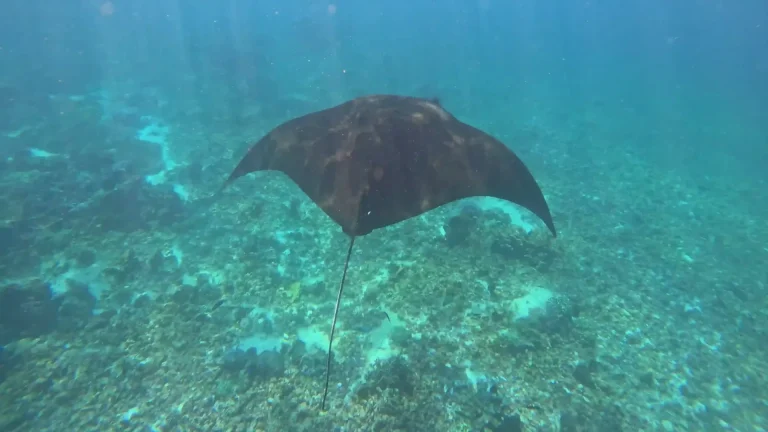
Best Komodo Cruise Itinerary for Manta Rays: Why 4D3N Gives You a Second Chance (2026)
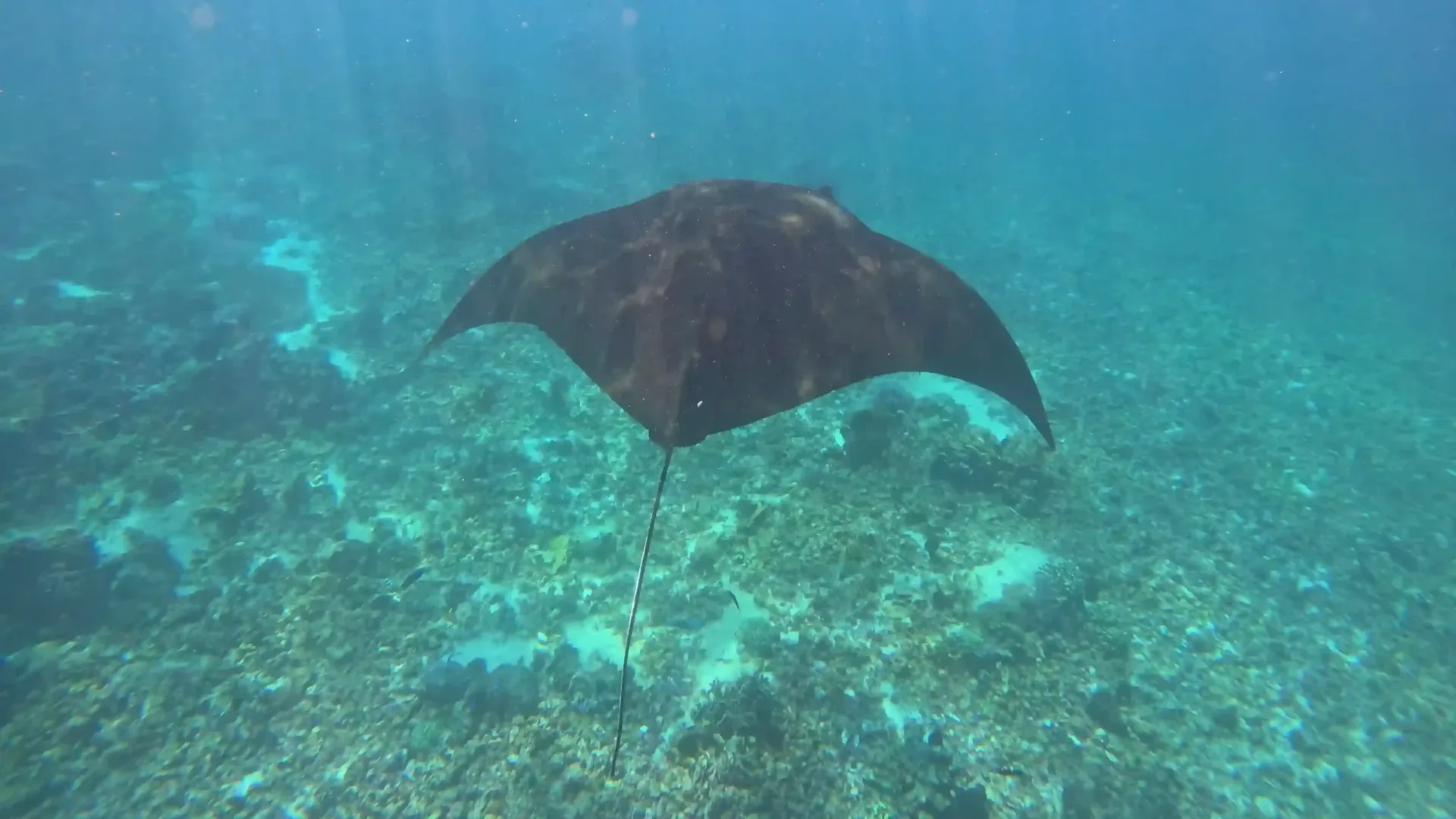
The best Komodo cruise itinerary for manta rays is a 4D3N, because it gives the crew room for a second attempt at Manta Point (Karang Makassar) on a different tide. A 3D2N reaches the same site once. Mantas are reported year-round, but no operator can guarantee a sighting; extra days only buy more tries.
Most people planning a manta trip compare routes. That comparison doesn’t tell you much. Nearly every Komodo cruise, from a shared 3D2N to a private yacht, lists Manta Point somewhere on the schedule. The real difference is whether the boat can come back when the first drift fails.
This guide skips stop-by-stop route planning. It looks at one question: how many real manta windows each cruise length gives you, and how a 4D3N turns a missed sighting into a second chance.
Why does a second manta attempt matter more than the route?
A manta drift is a bet on one slice of tide. The tender drops you up-current at Karang Makassar, the water carries you across the shallow reef flat, and the tender collects the group down-current. One pass is over quickly.
Plenty of things can spoil that slice:
- Current too strong for mixed-ability swimmers, so the crew shortens or cancels the drift
- Low visibility after wind, swell or a plankton bloom
- Mantas feeding elsewhere on the reef, away from the drop point
- A busy reef, with several tenders working the same channel in one entry session
- Slack water, when a late start pushes the stop past the moving tide that brings food in
None of this is unusual, and none of it predicts tomorrow. Tides run roughly 50 minutes later each day, so the water at Manta Point 24 hours later can behave very differently. A repeat attempt uses that shift.
How many manta attempts does each Komodo cruise length allow?
The table below shows common planning patterns as of 2026. Attempt counts are estimates, not promises, and every price is subject to change.
| Cruise format | Planned manta stops | Realistic retry? | Price reference (as of 2026) |
|---|---|---|---|
| Day speedboat tour | 1 short pass | No same-day retry | Quote on request |
| 2D1N cruise | 1 | Rarely | Mostly private; whole-boat rate quoted on request for the vessel, dates and guest count |
| 3D2N open trip | 1 fixed stop | No, the shared schedule for 8–22 guests is set | Share cabin quoted per person on request; weekday open trip quoted on request |
| 3D2N private | 1, movable | Sometimes, if the group drops another stop | Per vessel; quoted on request for the vessel, dates and guest count |
| 4D3N cruise | 1 planned, plus a realistic second window | Yes, the extra day is the buffer | Open trip on selected departures; private per vessel. Riley private trip 4D3N (2026): USD 5,600 per package for 1-8 persons, as listed on Komodo Luxury (checked 2026-09-16). |
That bottom row is why travellers who fly to Labuan Bajo mainly for mantas should look first at a 4D3N Komodo cruise. The extra night doesn’t add a new manta site. It adds slack, and slack is what lets a captain say “not today, we’ll try again tomorrow morning” without cutting Padar, Komodo Island or Pink Beach.
Private charters are always priced per vessel, never per person, and each boat publishes its own durations, guest limits and inclusions. Don’t assume one boat’s rate applies to another.
What does a 4D3N actually do with the extra day?
Think of the fourth day as insurance, not extra sightseeing. On a well-run manta-priority trip, the crew treats the first drift as attempt one and holds a decision point after it. The pattern below is typical, and the captain has the final say.
| Step | What happens | What decides it |
|---|---|---|
| Attempt 1 | First drift at Karang Makassar in the safest moving water available | Tide table, park entry session, group swimming level |
| Debrief | Guide reports sightings, current strength and visibility | Did guests see mantas clearly, only glimpse one, or see nothing? |
| Retry call | Captain decides whether to hold a second window | Forecast, anchorage position, available session slot |
| Attempt 2 | Drift on a different tide state, or at Mawan if conditions allow | Captain and guide judgement, with safety first |
| Release | If attempt 1 went well, the spare window goes to other stops | Group preference on private boats; set plan on open trips |
Mawan is described by dive guides as a manta cleaning area, but it isn’t a fixed stop and depends on conditions. On a shared 4D3N departure, a retry has to suit the whole group. On a private 4D3N, your party can tell the captain before departure that mantas come first. Ask which applies before you book.
What turns a failed attempt into a retry?
This is where the extra day earns its cost. Here’s how crews commonly respond to each outcome.
| First drift outcome | Typical response on a 3D2N | Typical response on a 4D3N |
|---|---|---|
| Mantas seen, clear water | Move on | Move on; spare time used elsewhere |
| Current too strong, drift cancelled | Stop usually lost | Second window planned on a different tide |
| Murky water, a brief glimpse | Move on | Retry if the forecast improves |
| No mantas near the drop point | Move on | Retry, or another manta area if the captain agrees |
| Weather closes the site | Stop lost | Buffer day absorbs it |
Two things a longer cruise can’t fix: mantas are wild animals, and the crew won’t put swimmers into unsafe current just to hit a target. A 4D3N raises your number of attempts. It doesn’t turn a sighting into a certainty.
How do season, moon phase and park rules affect a second attempt?
Each of these changes how much the buffer day is worth. Confirm current details with the desk before you travel.
- Dry season (April–November): seas are generally calmer, according to Komodo Luxury, and most open-trip departures run in these months. Book early for peak dates.
- Wet season (December–March): weather forces more route changes and departures thin out. A lost day is more likely, so a spare one matters more.
- Spring tides: around full and new moon, currents at Manta Point can run much harder. Crews may shorten drifts or keep weaker swimmers on the tender. If your dates are flexible, ask the desk to check the tide pattern for your window.
- Daily visitor cap: a cap of about 1,000 visitors per day across the park was reported, trialled January–March 2026 and enforced from 1 April 2026. Timed entry sessions run roughly 05:00–08:00, 08:00–11:00 and 15:00–18:00, so a retry also needs a slot.
- Pre-registration: passport details go through the operator’s manifest. Walk-in entry isn’t reliable.
- No night sailing in high-risk zones: from 10 January 2026, the Labuan Bajo harbourmaster (KSOP) reportedly restricted tourist-boat movement after dark. Boats anchor before nightfall, which often puts manta drifts in the early morning. A 4D3N gives you more of those mornings.
- Park fee: the Komodo National Park fee is paid once per trip and is not included in the cruise price. Ask the desk for the current rate.
How should you behave in the water so each attempt counts?
Mantas swim off when people crowd them, and a spooked animal can end an attempt for the whole group. Your guide briefs everyone before the drift. The rules most guides use:
- Never touch a manta. It damages the protective mucus on its skin.
- Keep at least 3 metres away and let the manta choose whether to come closer.
- Don’t chase or block one. Stay beside its path, not in front of it.
- Stay at the surface instead of diving down onto a feeding manta.
- No flash, no selfie sticks pushed toward the animal.
- Wear fins and a vest if you’re not a strong swimmer, and never stand on the reef.
- Watch for the pickup signal. In strong current, the tender collects the group down-current together.
Is a 4D3N worth the extra cost just for mantas?
It depends on how much a missed sighting would cost you. Match the cruise to your priority:
- Mantas are the reason for the trip: choose a 4D3N, either a selected open-trip departure or a private boat where you set the order.
- Tight budget, flexible dates: the weekday open trip, quoted on request for your dates, cabin and guest count, keeps one fixed Manta Point stop. Accept that it’s a single window.
- Mantas are one highlight among several: the 3D2N share-cabin open trip, quoted per person for your departure date, cabin and guest count, covers Padar, Pink Beach, Komodo Island and Manta Point.
- Small private group: Riley private trip 4D3N (2026): USD 5,600 per package for 1-8 persons, as listed on Komodo Luxury (checked 2026-09-16). Park fees are charged separately.
- Groups of up to 14 wanting yacht comfort: Le Costa is chartered as a whole yacht, with the rate quoted on request for your dates, duration and guest count. Ask whether a longer charter is available.
Whatever you book, land at Labuan Bajo (LBJ) the day before departure. From Bali, that means a Denpasar (DPS) to Labuan Bajo flight. A late arrival shouldn’t cost you the first manta window.
How do you ask for a manta-priority 4D3N?
Komodo Cruise is operated by Komodo Luxury, a Labuan Bajo operator, and bookings go directly to its reservations team. Send four details so the team can plan around mantas from the start:
- Say that mantas are your top priority.
- Give each guest’s swimming ability.
- Share your exact travel dates, so the team can check tides and moon phase.
- Choose between a shared departure and a private vessel.
Reach the desk on WhatsApp at +62 811-3823-875 or by email at sales@komodoluxury.com.
Frequently Asked Questions
Can a 4D3N Komodo cruise guarantee manta ray sightings?
No. Mantas are reported in Komodo all year, but no operator can promise a sighting. A 4D3N gives the crew room for a second attempt on a different tide if the first drift is cancelled, murky or empty. That improves your odds, but safety and conditions always come first.
Is the 3D2N open trip enough to see manta rays in Komodo?
It can be. Komodo Luxury’s fixed 3D2N route includes Manta Point, and share cabins are quoted per person for the departure, vessel and cabin you choose. The shared schedule allows one planned attempt, though, so a strong current or poor visibility usually means that stop is lost. If mantas matter most, a 4D3N leaves room to retry.
Can I see manta rays on a day trip from Labuan Bajo?
Yes, many speedboat day tours stop at Manta Point, with shared seats quoted per person by the operator. You get one short pass on a fixed timetable, and there’s no second try the same day if conditions are poor.
Do I need a diving licence to see mantas on a Komodo cruise?
No. At Manta Point, most guests snorkel on a guided drift over the shallow reef flat, and mantas are often visible from the surface. Snorkelling equipment is included on Komodo Luxury open trips. Diving is a separate arrangement, and weaker swimmers should wear a vest because the current can run strong.
When is the best time of year for a manta-focused Komodo cruise?
The dry season, April to November, generally brings calmer seas and the most open-trip departures. The wet season, December to March, has fewer departures and more weather changes, which makes a buffer day more valuable. Avoiding the strongest spring tides around full and new moon can also help.
Keep Reading
Uncategorized
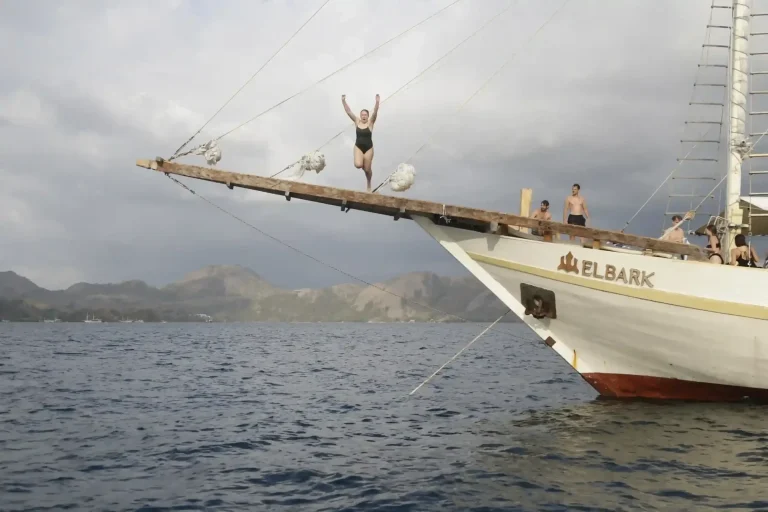
Elbark vs Ayvara Komodo Boat: Cabins, Prices and Fit (2026)
Elbark vs Ayvara comes down to group size and budget. Elbark is a 37-metre phinisi with 9 cabins for up…
Uncategorized
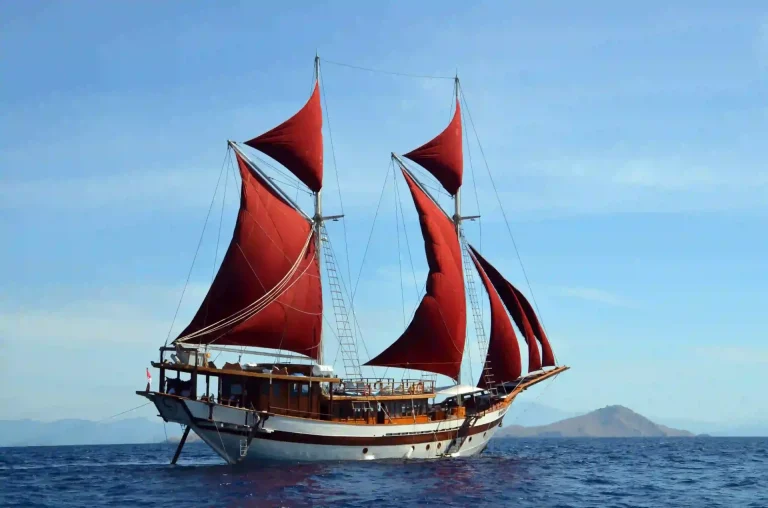
How Far in Advance to Book a Komodo Cruise: 2026 Lead-Time Guide
For most travellers, book a Komodo cruise 3 to 6 months ahead for July–August and the Christmas–New Year window, 6…
Uncategorized
Is a Komodo Cruise Safe for Kids? A 2026 Parent’s Safety Guide
Yes, a Komodo cruise can be safe for kids if you plan around the real risks: ranger-led dragon treks with…